
Factors Affecting the Flowability of Silica Fume
Factors Affecting the Flowability of Silica Fume
2026-04-17 16:23 yellowriver microsilica
5
Factors Affecting the Flowability of Silica Fume
1. Physical Properties
- Particle size and specific surface areaSilica fume has an extremely fine particle size (approx. 0.1–0.3 μm) and a large specific surface area (15,000–30,000 m²/kg), which intensifies van der Waals forces between particles, leading to easy agglomeration and reduced flowability.
- Particle morphologyParticles are mostly spherical, which theoretically favors flowability. However, the ultra-high specific surface area and surface energy counteract this spherical advantage.
- Bulk densityIt has a low loose bulk density (approx. 200–300 kg/m³), with large interparticle voids that easily create air resistance and impair flow.
2. Moisture and Moisture Content
- HygroscopicitySilica fume has high surface adsorptivity. Even a small amount of moisture (>0.5%) forms liquid bridges on particle surfaces, causing severe agglomeration and a sharp decline in flowability.
- Storage environmentSilica fume tends to cake in humid environments and requires strict moisture protection.
3. Chemical Composition and Surface Condition
- SiO₂ content and impuritiesHigh-purity silica fume (SiO₂ > 90%) has high surface activity and adsorbs moisture or gas more easily. Impurities such as alkali metal oxides may affect surface charge and agglomeration behavior.
- Surface modificationHydrophobic treatment (e.g., with silane coupling agents) or nano-silica coating can reduce agglomeration and improve flowability.
4. Processing and Treatment Methods
- Densification treatmentMechanical compaction or fluidized bed processes increase bulk density (up to 500–700 kg/m³), reduce interparticle air gaps, and improve flowability.
- Vibration and aerationApplying vibration or slight air fluidization breaks up agglomerates and temporarily improves flowability (e.g., in pneumatic conveying).
5. Environmental and External Conditions
- Temperature and humidityHigh temperature and low humidity help maintain dryness and reduce liquid bridge formation; low temperature and high humidity promote agglomeration.
- Electrostatic effectParticles tend to accumulate static electricity in dry conditions, causing adhesive agglomeration and uneven flow.
6. Interaction with Other Materials
Mixing system
In cement or mortar, silica fume readily adsorbs water-reducing agents. Improper formulation increases paste viscosity and impairs overall flowability.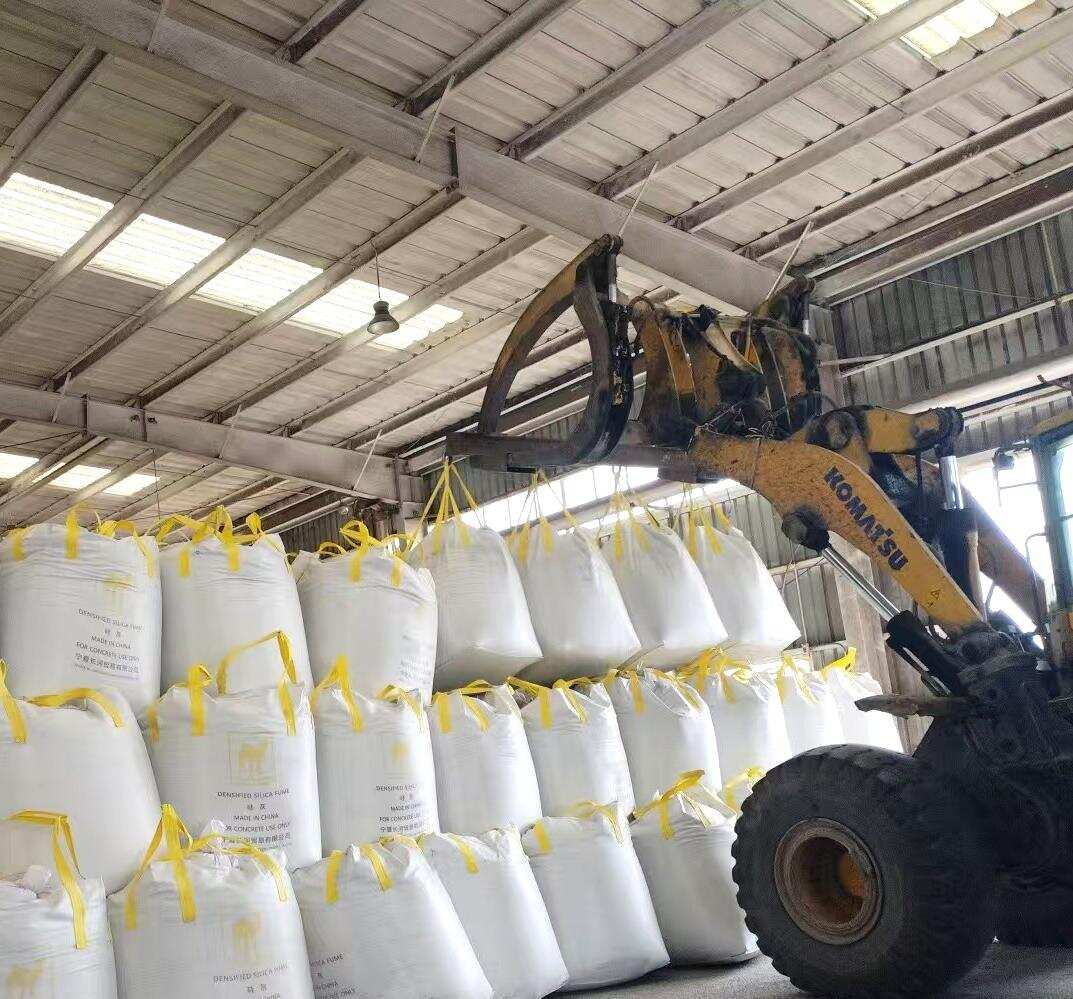
Statement: This article is the original work of Yellow River Building Materials Co., Ltd. Please indicate the source link when reprinting https://yellowriver-microsilica.com/sys-nd/51.html
Name:
Message:
Verification code: 
Submit
Comment
Contact Us
We are unwaveringly customer-focused and constantly strive to improve our work,
with a commitment to fully meeting customer needs through high-quality products and services.



