From Industrial Waste to Concrete "Reinforcer": The Discovery of Silica Fume and Its Application Course in the Concrete Field
From Industrial Waste to Concrete "Reinforcer": The Discovery of Silica Fume and Its Application Cou
From Industrial Waste to Concrete "Reinforcer": The Discovery of Silica Fume and Its Application Course in the Concrete Field
In modern construction engineering, silica fume has long become an indispensable core admixture for high-performance concrete. It can make concrete denser, tougher and more durable, supporting various key and difficult projects such as super high-rise buildings, cross-sea bridges and nuclear power projects. However, few people know that this "magic powder" was initially just waste smoke and dust from industrial production. The discovery of its value and its promotion and application in the concrete field have gone through decades of exploration and breakthroughs, making it a model for the resource utilization of industrial waste.
Accidental Discovery: An "Invisible Treasure" in Industrial Smoke and Dust
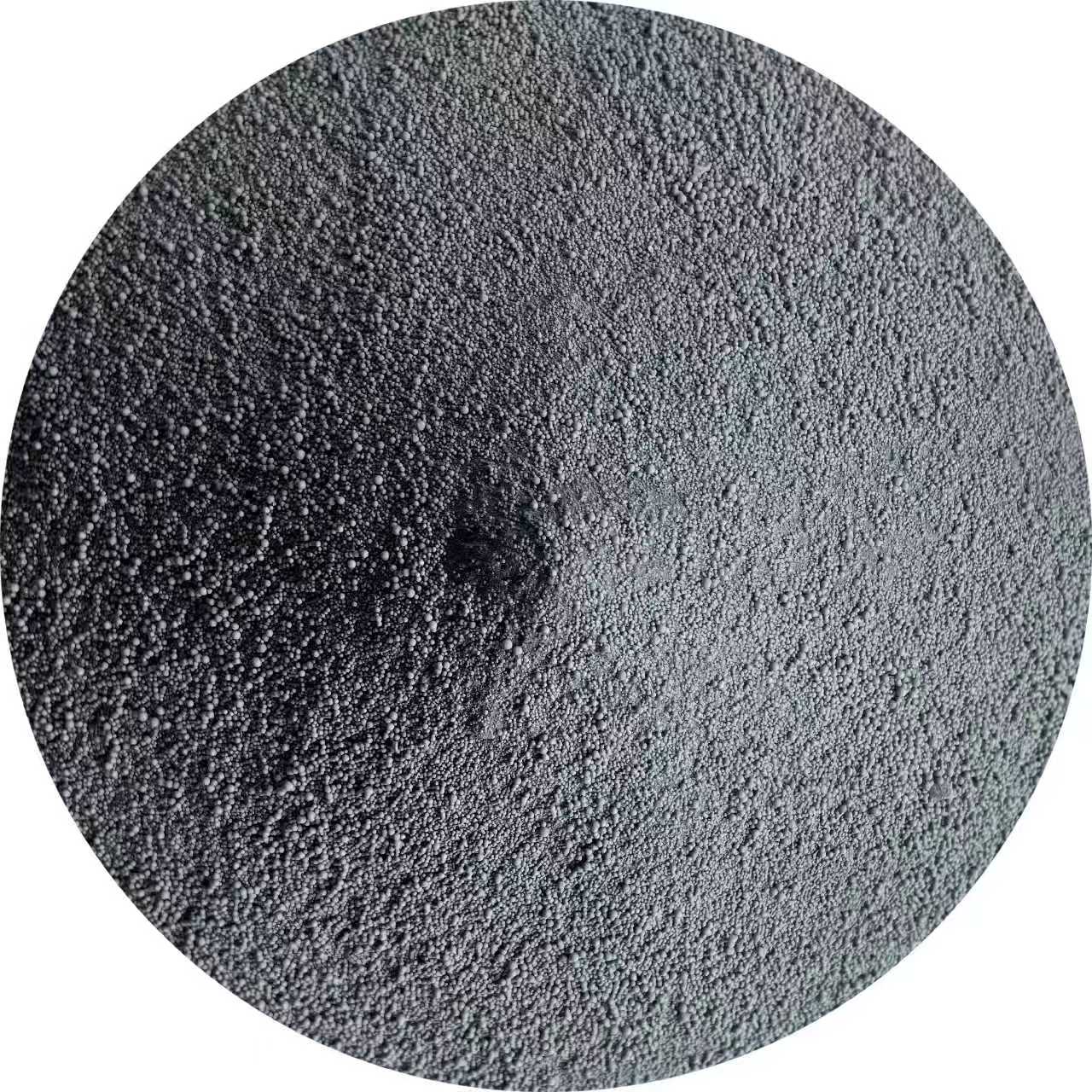
The discovery of silica fume originated from the smelting production of industrial silicon and ferrosilicon. In a high-temperature electric furnace, quartzite, coke and other raw materials are smelted at a high temperature of nearly 2000℃, producing a large amount of silicon vapor. After these vapors escape, they react rapidly with oxygen in the air and condense to form fine spherical amorphous silica powder, which is silica fume, also known as silica dust. Its average particle size is only 0.1~0.3μm, nearly 100 times smaller than cement particles, with SiO₂ content as high as more than 90% and strong pozzolanic activity. However, this characteristic was not noticed by humans in the early days.
As early as the 1940s, silica fume had appeared in industrial production. It was first mentioned in a US patent in 1947, but it did not attract attention at that time. It was not until 1950 that Norway took the lead in carrying out preliminary tests of silica fume in concrete, and in 1952, humans formally conducted systematic tests on the performance of silica fume in Portland cement-based concrete for the first time. However, early research faced a key problem - the lack of sufficient test materials. At that time, researchers could only use expensive fumed silica as a substitute. In the late 1960s in Europe and the mid-1970s in the United States, real silica fume was still regarded as industrial waste and directly discharged into the atmosphere, which not only polluted the environment but also wasted valuable resources.
The real attention to the value of silica fume began with the demand for environmental governance. In the mid-1970s, various countries began to implement stricter environmental protection regulations, and silicon smelters had to find ways to collect these smoke and dust to reduce air pollution. In the process of collecting and treating these smoke and dust, researchers accidentally discovered its special properties - this ultra-fine powder can not only react with cement hydration products but also fill the tiny gaps between cement particles, laying the foundation for its application in the concrete field. Among them, the research in Norway is the most striking. Local researchers found that concrete mixed with silica fume has extremely high strength and extremely low porosity, a discovery that completely changed people's understanding of this industrial waste.
Technological Exploration: Breakthrough from Laboratory to Engineering Pilot
The application of silica fume in concrete did not happen overnight, but went through a long exploration from laboratory research to engineering pilot. In the early 1970s, Norway took the lead in allowing the application of silica fume in concrete. In 1971, silica fume was applied to commercial concrete for the first time, marking its official transition from the laboratory to practical engineering. Since then, Norway, Sweden and other Nordic countries took the lead in applying it to projects with high requirements for concrete performance such as ports and terminals, the North Sea oilfields and underground mines. In 1982, Norway officially used silica fume concrete to build the Vynovos Dam, further verifying its applicability in large-scale projects.
At this stage, researchers gradually uncovered the core mechanism of silica fume improving concrete performance: on the one hand, the physical filling effect. The ultra-fine particle size of silica fume can accurately fill the tiny gaps between cement particles and aggregates, reduce the porosity of concrete, and make the structure denser; on the other hand, the pozzolanic chemical reaction. The high-activity SiO₂ in silica fume reacts with Ca(OH)₂ generated by cement hydration to form C-S-H gel with higher strength, which not only consumes the lower-strength Ca(OH)₂ but also increases the total amount of cementitious materials, significantly improving the bond strength and strength of concrete. In addition, silica fume can also improve the durability of concrete such as impermeability, corrosion resistance and freeze-thaw resistance, and at the same time reduce the hydration heat of mass concrete, reducing the risk of temperature cracks. These characteristics make it an ideal admixture for high-performance concrete.
At the same time, other countries also followed up with research. In 1980, the annual output of silica fume in Norway had reached 55,000 tons, laying the foundation for large-scale application; in 1983, the United States used silica fume concrete to repair the stilling basin of the Kacha Dam on the Orifni River, achieving good results; Canada also established a silica fume concrete test base in the early 1980s, mixing 10,000 cubic meters of high-grade concrete and accumulating a lot of engineering experience. In China, the research on silica fume started relatively late. It was not until 1985 that the Research Institute of the East China Investigation and Design Institute of the Ministry of Water Resources and Electric Power and the 10th Engineering Bureau of the Ministry of Water Resources and Electric Power first tried silica fume concrete in the Sichuan Yuzixi No. 2 Power Station. Adding 3%~7% silica fume to the plant concrete effectively improved the early strength and accelerated the formwork turnover; adding 7.5% silica fume to the shotcrete of the diversion tunnel significantly reduced the concrete rebound rate. This was the first attempt to apply silica fume in the concrete field in China.
The improvement of technical standards has provided a guarantee for the promotion of silica fume. In 1987, Europe took the lead in formulating the silica fume product standard (CEN EN13263), clarifying the quality requirements and application specifications of silica fume. Since then, various countries have also successively issued relevant standards to regulate its mixing amount and use method in concrete, making the application of silica fume move from "pilot exploration" to "standardized development".
Widespread Application: Supporting the "Invisible Skeleton" of Modern Engineering
With the maturity of technology and the improvement of standards, silica fume has gradually broken through geographical restrictions and been widely used in the global concrete field. It can be seen in various projects from ordinary buildings to super projects, and from ground buildings to underground and marine projects. The expansion of its application scenarios is not only due to its excellent performance but also to the development of supporting technologies such as high-efficiency water reducers - solving the problem of excessive viscosity and decreased fluidity of concrete caused by too high mixing amount of silica fume, allowing its performance to be fully exerted.
In the field of ultra-high-strength concrete, silica fume is almost indispensable. Adding silica fume can greatly reduce the difficulty of preparing concrete with compressive strength exceeding 100MPa. For example, to obtain concrete strength of 70MPa, pure cement requires a water-binder ratio of 0.35, while adding 8% silica fume can increase the water-binder ratio to 0.50, greatly reducing construction difficulty and cost. Super high-rise buildings such as the Burj Khalifa in Dubai and the Petronas Twin Towers in Kuala Lumpur, Malaysia, all use a large amount of high-performance concrete mixed with silica fume. Among them, the highest strength grade of concrete used in the Petronas Twin Towers reaches C80, and the actual strength even reaches 138MPa, supporting the huge building structure.
In bridge engineering, the advantages of silica fume are also prominent. The Chongqing Dafosi Bridge adopts C60 concrete, and the addition of silica fume effectively improves the early strength of concrete, meeting the construction requirement of prestress tensioning 3 days after pouring; the Hong Kong Tsing Ma Bridge requires concrete to have excellent chloride ion penetration resistance, low hydration heat and high early strength, and the application of silica fume provides a guarantee for its 120-year service life; the Norwegian Stolma Cross-Sea Bridge, as the continuous rigid frame bridge with the largest span in the world, also incorporates silica fume into the lightweight aggregate concrete used in its central span to ensure the stability and durability of the bridge.
In projects in harsh environments, the durability advantage of silica fume is fully reflected. Nuclear power projects have extremely high requirements for the impermeability and corrosion resistance of concrete. The reactor dome buildings of India's Kaiga and Kota nuclear power plants use concrete mixed with silica fume, which effectively improves the structural strength and bond strength and resists various errosions; in marine and port engineering, silica fume can significantly improve the chloride ion and sulfate penetration resistance of concrete, protect steel bars from corrosion, and extend the service life of the project; in cold regions, silica fume can reduce concrete frost heave damage, improve freeze-thaw resistance, and adapt to complex climatic environments.
In China, the application of silica fume is also becoming increasingly widespread. The Nanjing Hydraulic Research Institute has adopted silica fume concrete in projects such as the Dahuofang Reservoir Project, the Longyangxia discharge structures and the Gezhouba Dam discharge sluice repair, achieving remarkable results; the research of the China Institute of Water Resources and Hydropower Research has promoted the application of silica fume concrete in projects such as the foundation consolidation grouting of the Ertan Hydropower Station and the overflow surface repair of the Panjia Dam, gradually covering multiple fields such as water conservancy and hydropower, construction and bridges. Today, silica fume has become an indispensable admixture in China's high-performance concrete, shotcrete and mass concrete. The mixing amount is usually controlled at 5%~10% of the total amount of cementitious materials, and 7%~8% is commonly used, which can not only ensure performance but also control costs.
Conclusion: A Model of Industrial Waste Resource Utilization and Future Outlook
From casually discharged industrial smoke and dust to the "concrete reinforcer" supporting modern engineering, the application course of silica fume is a vivid epitome of the resource utilization of industrial waste. Its discovery originated from accidental environmental protection needs; its promotion benefited from the continuous exploration of researchers; its wide application conforms to the demand of modern architecture for high-performance and high-durability concrete. Today, with the in-depth integration of nanotechnology and building materials, the synergistic application of silica fume and nano-silicon is further improving the performance of concrete and expanding its application boundaries.
In the future, with the continuous improvement of environmental protection requirements and the continuous upgrading of construction technology, the recovery and utilization rate of silica fume will be further improved, and its application in the concrete field will be more refined and diversified. At the same time, with in-depth research, the potential of silica fume in improving concrete crack resistance and reducing carbon emissions will be further explored, continuing to provide support for the high-quality development of modern construction projects and writing a new chapter in turning industrial waste into treasure.