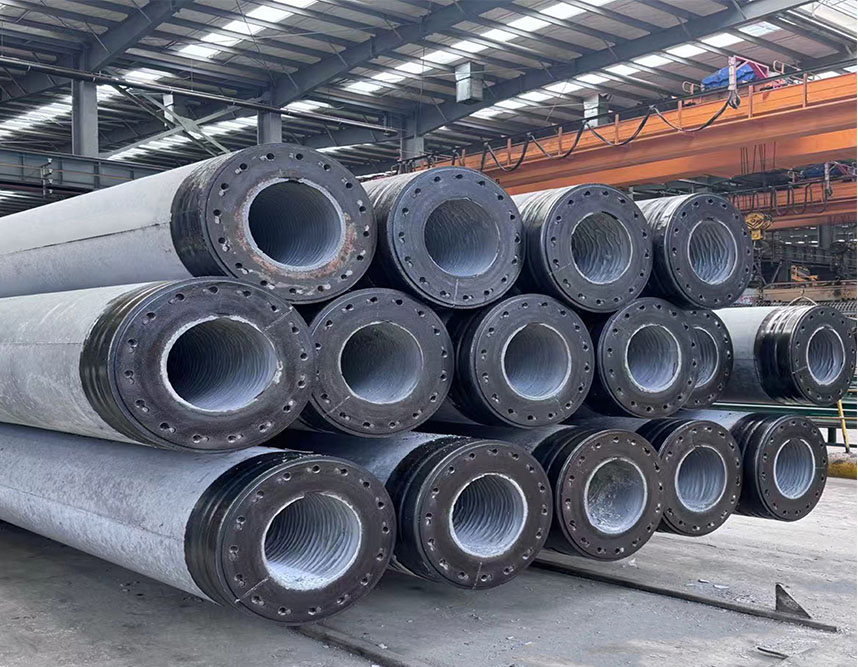
Application of Microsilica in Prestressed Ultra-High-Strength Concrete Pipe Pile (UHC Pile)
Prestressed Ultra-High-Strength Concrete Pipe Pile (UHC Pile) is a new type of high-efficiency load-bearing component. With its advantages of ultra-high strength, high durability, light weight and convenient construction, it is widely used in high-rise buildings, bridge projects, ports and terminals, marine engineering and other fields that have high requirements for pile bearing capacity and service life. Microsilica, also known as silica fume, is a high-performance mineral admixture. It is an ultra-fine amorphous silica powder recovered from flue gas during the smelting of metallic silicon or ferrosilicon alloys. Its average particle size is only 0.1-0.5μm, and its specific surface area is as high as 15000-25000m²/kg. It has extremely high pozzolanic activity and filling effect, and has become one of the core admixtures for preparing UHC piles and optimizing their comprehensive performance. Combining the material properties of microsilica, this paper systematically elaborates on its mechanism of action, application advantages, construction control points and engineering practice in UHC piles, providing technical reference for the high-performance application of UHC piles.
1. Core Properties of Microsilica and Its Mechanism of Action in UHC Piles
The core technical requirements of UHC piles are to achieve ultra-high strength (usually the design strength grade ≥ C80, and some projects can reach C100 and above) and excellent durability. However, ordinary cement-based materials are difficult to meet these two requirements at the same time—simply increasing the cement dosage will lead to excessive hydration heat, increased risk of shrinkage and cracking, and high internal porosity, which affects strength and durability. Relying on its unique physical and chemical properties, microsilica effectively solves this problem through the dual effect of "physical filling + chemical reaction". Its mechanism of action is mainly reflected in the following four aspects.
a. Physical Filling Effect to Densify the Internal Structure of Concrete
Microsilica particles are extremely fine, only 1/50-1/100 of ordinary cement particles. They can fully fill the tiny pores between cement particles and between cement hydration products, and even can fill the capillary pores of calcium silicate hydrate (C-S-H) gel, significantly reducing the porosity and pore size of UHC pile concrete and blocking the formation of connected pores. Compared with traditional admixtures (such as fly ash and mineral powder), the specific surface area of microsilica is dozens or even hundreds of times that of them, and the filling effect is more significant. It can make the internal structure of concrete more dense, forming a "dense skeleton", which lays a physical foundation for ultra-high strength and high durability. Studies have shown that after adding microsilica, the porosity of UHC pile concrete can be reduced by 30%-50%, which effectively improves the interface bonding state between aggregate and cement paste, and avoids the problem of interface strength reduction caused by bleeding accumulation.
b. Pozzolanic Reaction to Improve Mechanical Properties
The main component of microsilica is amorphous silica (content up to 90%-95%), which has extremely high pozzolanic activity. Under alkaline environment (provided by calcium hydroxide produced by cement hydration) and certain temperature conditions, it will undergo a secondary hydration reaction with free calcium hydroxide (Ca(OH)₂) generated by cement hydration to produce more stable C-S-H gel. C-S-H gel is the core source of concrete strength. The increase in its quantity can not only significantly improve the compressive strength and flexural strength of concrete, but also enhance the bond strength of concrete—which is crucial for the bonding between prestressed steel bars and concrete in UHC piles, can effectively transfer prestress, avoid separation between steel bars and concrete, and ensure the bearing stability of piles. At the same time, the secondary hydration reaction consumes a lot of free Ca(OH)₂, reduces the components susceptible to erosion, and further optimizes the microstructure of concrete.
c. Optimizing Workability to Adapt to Pile Production Process
UHC piles are usually produced by centrifugal forming and steam curing (atmospheric pressure + high pressure) processes, which have extremely high requirements for the fluidity, cohesion and water retention of concrete mixtures—insufficient fluidity will lead to insufficient compactness during centrifugal forming, resulting in defects such as honeycombs and pitting surfaces; poor cohesion is prone to segregation and bleeding, affecting the homogeneity of piles. The addition of microsilica can effectively improve the workability of concrete mixtures: on the one hand, its ultra-fine particles can play a "ball bearing effect", optimize the rheological properties of the mixture, improve fluidity and pumpability, and facilitate centrifugal forming operations; on the other hand, the huge specific surface area of microsilica can absorb a lot of water, effectively reducing the bleeding phenomenon of concrete, avoiding bleeding accumulation under aggregates and steel bars, ensuring the uniformity and surface quality of pile concrete, and creating conditions for the rapid development of strength during the steam curing stage.
d. Improving Durability to Extend Pile Service Life
UHC piles are often used in complex and harsh environments (such as marine environments and underground corrosive environments), and need to have excellent impermeability, chloride ion erosion resistance, sulfate erosion resistance and frost resistance. Through densification, microsilica can effectively block the penetration channels of external harmful substances (chloride ions, sulfates, etc.) and reduce the permeability of concrete: the UHC pile concrete with microsilica added can have an impermeability grade of P12 and above, and its chloride ion penetration resistance is improved several times or even dozens of times. Through ASTM C1202 coulomb method test, its electric quantity is usually less than 1000 coulombs, which belongs to the "very low" penetration level, and can effectively protect prestressed steel bars from corrosion. At the same time, the dense C-S-H gel generated by the secondary hydration reaction can improve the frost resistance of concrete. After 300-500 rapid freeze-thaw cycles, the relative elastic modulus decreases by only 10%-20%, which is much better than ordinary concrete; in addition, it can also improve the abrasion resistance and cavitation resistance of concrete, adapting to the application needs of special scenarios such as ports and water conservancy.
2. Application Advantages of Microsilica in UHC Piles
Compared with traditional admixtures (such as fly ash and mineral powder), the application of microsilica in UHC piles has irreplaceable advantages. It can not only optimize the core performance of piles, but also reduce production costs and improve production efficiency. The specific aspects are as follows.
a. Significantly Improve Pile Strength and Break Through Performance Bottlenecks
Adding an appropriate amount of microsilica to UHC pile concrete can effectively break through the strength limit of ordinary cement-based materials. Practice has shown that when the dosage of microsilica is 5%-25% of the cement mass (preferably 5%-15%), the compressive strength of concrete can be increased by 10%-30%, and the flexural strength can be increased by more than 10%, which can easily meet the design requirements of strength grade C80 and above, and can reach ultra-high strength C100 in some cases. At the same time, microsilica can promote the early strength development of concrete, and the strength can reach more than 80MPa after atmospheric pressure steam curing, which shortens the curing cycle and improves the pile production efficiency, especially suitable for projects with tight construction periods.
b. Improve Pile Crack Resistance and Reduce Production Defects
During the production process of UHC piles (especially during the steam curing stage), temperature changes are likely to cause temperature difference cracks, especially at the joints of jointed piles, where cracking is more prominent. The addition of microsilica can effectively alleviate this problem: on the one hand, its secondary hydration reaction can consume part of the heat generated by cement hydration, reduce the peak hydration heat of concrete, and reduce the internal and external temperature difference; on the other hand, the dense microstructure can improve the tensile strength and toughness of concrete, enhance crack resistance, avoid cracks in piles during curing, transportation and construction, reduce the rate of production defects, and improve the qualification rate of piles.
c. Optimize Prestress Transfer Efficiency and Ensure Bearing Safety
The bearing capacity of UHC piles depends on the effective bonding between prestressed steel bars and concrete. Microsilica can improve the interface bonding strength by improving the interface bonding state between concrete and steel bars, ensure that prestress can be effectively transferred to the concrete matrix, and avoid problems such as steel bar sliding and separation. At the same time, the ultra-high strength concrete matrix can better bear the tensile stress of prestressed steel bars, reduce the creep and shrinkage of piles, ensure the bearing stability of piles during long-term service, and is suitable for large-span and high-load engineering scenarios.
d.Reduce Production Costs and Achieve Energy Conservation and Emission Reduction
As a product of industrial waste recycling, microsilica is much cheaper than high-strength cement. Adding microsilica to UHC piles can replace part of the cement in equal quantity (the replacement amount is usually 10%-20%), which can not only reduce the cement dosage, but also reduce energy consumption and carbon emissions during cement production, in line with the concept of green building development. At the same time, the addition of microsilica can reduce the dosage of concrete admixtures, optimize the mixture performance, and further reduce the production cost of piles, achieving a win-win situation of economic and environmental benefits.
e. Adapt to Complex Environments and Expand Application Scenarios
Microsilica significantly improves the durability of UHC piles, enabling them to adapt to complex and harsh working conditions such as marine environments, underground corrosive environments and freeze-thaw environments, breaking the application limitations of traditional piles in harsh environments. For example, in cross-sea bridges, ports and terminals and other projects, UHC piles with microsilica added can effectively resist seawater erosion and chloride ion corrosion, extending the service life to more than 100 years; in cold areas, their excellent frost resistance can avoid pile damage due to freeze-thaw cycles, expanding the application scope of UHC piles.
3. Application Points and Control Measures of Microsilica in UHC Piles
The application effect of microsilica in UHC piles depends not only on its own quality, but also on factors such as dosage, mix ratio design and construction technology. It is necessary to strictly control various parameters to ensure that the pile performance meets the design requirements. The specific control points are as follows.
a. Quality Control of Microsilica
Microsilica used in UHC piles must meet the requirements of relevant industry standards, and the core indicators are controlled as follows: silica (SiO₂) content ≥ 90%, average particle size 0.1-0.5μm (preferably 0.15μm), specific surface area 15000-25000m²/kg, loss on ignition ≤ 6%, water content ≤ 3%, and no obvious impurities. Since microsilica is derived from industrial smelting flue gas, different smelting processes and dust removal systems will affect the stability of its quality. Therefore, it is necessary to select products with strict classification treatment and impurity control to avoid the decline of pile performance due to the fluctuation of microsilica quality; at the same time, microsilica is easy to absorb moisture and agglomerate, so it should be stored in a sealed and moisture-proof manner, and crushed before use to ensure that it is uniformly dispersed in the concrete mixture.
b. Dosage Control
The dosage of microsilica has a significant impact on the performance of UHC pile concrete. Too low dosage cannot give full play to its filling and active effects, while too high dosage will lead to increased water demand, decreased fluidity of concrete mixture, and even shrinkage and cracking. Combined with engineering practice, the dosage of microsilica in UHC piles (based on cement mass) should be controlled at 5%-15%. The specific dosage should be determined by tests according to the pile strength grade, cement type, admixture type and construction technology. For example, the dosage of microsilica for C80 grade UHC piles is usually 8%-12%, and that for C100 grade can be appropriately increased to 10%-15% to ensure both strength and workability.
c. Optimal Design of Mix Ratio
The addition of microsilica will change the water demand and workability of concrete, so it is necessary to optimize the mix ratio of UHC piles: first, control the water-binder ratio between 0.25-0.45, and use high-efficiency water reducer (preferably polycarboxylate superplasticizer) to compensate for the increased water demand caused by microsilica, ensure the fluidity and cohesion of the mixture, and meet the requirements of centrifugal forming; second, reasonably adjust the aggregate gradation, use clean fine aggregate with good gradation to avoid impurities affecting the pozzolanic reaction of microsilica, and the sand ratio can be slightly higher than that of ordinary concrete to improve the homogeneity of the mixture; third, appropriately add admixtures such as mineral powder and fly ash to cooperate with microsilica to further optimize the strength and durability of concrete and reduce hydration heat.
d. Construction Technology Control
1. Mixing Technology: Microsilica particles are small and easy to agglomerate. During mixing, the "dry mixing first and then wet mixing" method should be adopted—first put cement, microsilica and aggregate into the mixer for dry mixing for 30s to ensure uniform dispersion of microsilica, then add water and admixture for wet mixing for 3-5min to avoid microsilica agglomeration and affect concrete performance; the mixing time should be extended by 1-2min compared with ordinary concrete to ensure uniform mixture.
2. Centrifugal Forming: The centrifugal speed and time should be adjusted according to the pile specifications to ensure the compactness of concrete and avoid defects such as honeycombs and pitting surfaces caused by insufficient fluidity; during centrifugation, the state of the mixture should be observed, and the dosage of admixture should be adjusted in time to ensure forming quality.
3. Curing Technology: UHC piles usually adopt the "atmospheric pressure steam curing + high pressure steam curing" method. The addition of microsilica can accelerate the strength development of concrete. The atmospheric pressure steam curing temperature can be controlled at 60-80℃, and the curing time is 4-6h to ensure that the concrete strength reaches more than 80% of the design strength; the high pressure steam curing temperature is controlled at 180-200℃, the pressure is 1.0-1.2MPa, and the curing time is 2-3h to promote the full secondary hydration reaction of microsilica and further improve the pile strength and durability. During the curing process, the temperature rise and fall speed should be controlled to avoid pile cracking due to excessive temperature difference.
e. Quality Inspection
During the production process, it is necessary to strengthen the quality inspection of UHC piles, focusing on testing indicators such as compressive strength, flexural strength, impermeability and chloride ion penetration resistance of concrete to ensure they meet the design requirements; at the same time, test the appearance quality, dimensional deviation and prestress transfer effect of piles, and timely find and solve problems in the production process to ensure pile quality.
4. Engineering Application Examples
For a cross-sea bridge project, UHC piles were designed as the bridge foundation. The pile strength grade was C80, the single pile bearing capacity requirement was ≥ 8000kN, the service environment was marine environment, which required excellent chloride ion erosion resistance and frost resistance. In this project, 10% microsilica (SiO₂ content 92%, average particle size 0.15μm) was added to the UHC pile concrete, combined with polycarboxylate superplasticizer. After optimizing the mix ratio, the compressive strength of concrete reached 88MPa, the flexural strength reached 12.5MPa, the impermeability grade was P12, and the chloride ion penetration electric quantity was 850 coulombs, meeting the design requirements.
During the production process, by strictly controlling the microsilica dosage, mixing technology and curing technology, the qualification rate of piles reached more than 99%, with no obvious cracks, honeycombs and other defects. Three years after the project was put into operation, the UHC piles had no corrosion, cracking and other problems, and the bearing performance was stable, which fully reflected the significant effect of microsilica in improving the strength and durability of UHC piles. In addition, by adding microsilica, the project replaced 15% of the cement dosage, saving a total of about 2000 tons of cement, reducing production costs, and at the same time reducing carbon emissions, achieving green construction.
Similar engineering cases include Zhoushan Marine UHPC Project and Hong Kong Tsing Ma Bridge. All of them prepared UHC piles by adding microsilica, which effectively solved the problems of insufficient strength and poor durability of ordinary piles, ensured the safety and durability of the project, and promoted the application of UHC piles in complex projects.
5. Conclusion
Relying on its unique physical filling effect and pozzolanic activity, microsilica plays an irreplaceable role in UHC piles. It can significantly improve the strength, durability and crack resistance of piles, optimize construction performance, reduce production costs, and expand the application scenarios of UHC piles. In the production and application of UHC piles, it is necessary to strictly control the quality and dosage of microsilica, optimize the mix ratio design and construction technology to ensure that its role is fully played.
With the development of China's infrastructure construction towards high performance, long service life and greenization, the application of UHC piles will become more and more extensive. As a core admixture, the application technology of microsilica will also be continuously optimized and improved. In the future, through further research on the synergistic effect of microsilica with other admixtures and optimization of application technology, the comprehensive performance of UHC piles can be further improved, promoting the high-quality development of the prestressed ultra-high-strength concrete pipe pile industry and providing strong guarantee for the safety and stability of various major projects.